View Project
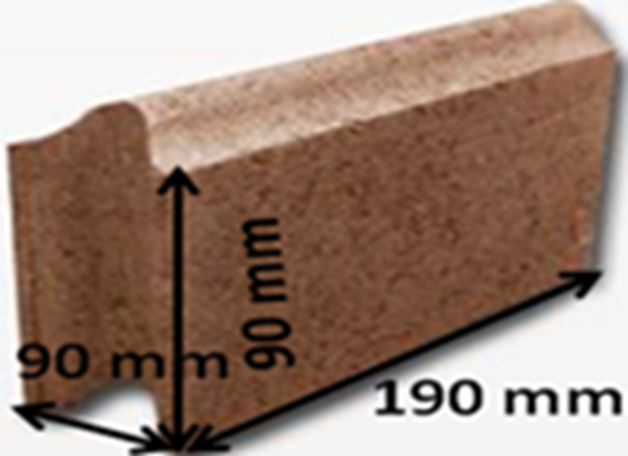
Pilot scale fabrication of joint free brick size gamma and neutron shielding blocks
Status: New
Lab/Organization
| Name & address of the Laboratory/Organization | CSIR- Advanced Material Process Research Institute (AMPRI) | |
| Website address | www.ampri.res.in | |
| Affiliated to which Department/Ministry | Council of Scientific and Industrial Research (CSIR) | |
| CSR Registration Number | CSR00017422 | |
| Registration under 12A | ||
| Registration under 80G | ||
| Name of the CSR Nodal | Dr. Kirti Soni | |
| Contact information of CSR Nodal | 9711154513 , soniks@ampri.res.in | |
| Principal Investigator | Dr. Shabi Thankaraj Salammal , tsshabi@ampri.res.in | |
| Co- Principal Investigator (Co-PI) | Dr. Deepti Mishra, deeptimishrampri@gmail.com | |
Project Detail
| Objective on the basis of need | I. Collection and mineralogical analysis of red mud. II. Identification of appropriate die material for the hot compaction of red mud between 900 - 1200°C under ambient condition. III. Designing of joint free die and optimization of curvature through simulation. IV. Optimization of composition and fabrication of brick size (190mm x90mm x 90mm) joint free gamma and neutron shield with the density of ≈5g/cc. V. Optimization of die design, automatic die joining and releasing mechanism, die releasing temperature and time to deliver a viable technology. VI. Gamma ray and neutron attenuation analysis at BARC, Mumbai/VECC, Kolkata. VII. Assessing the life of the shield by irradiating with various fluence of neutron using cyclotron. VIII. Development of fly ash-Red Mud based X-ray shielding tiles through Geopolymer Route by together grinding of raw materials like fly ash, red mud, high Z metal compounds and alkali activators. IX. Evaluation of mechanical, water absorption, density, structural, and other relevant properties. X. Evaluation of heavy element leaching characteristics of the shields. XI. Evaluation of X-ray attenuation characteristics of the shield. XII. Identification of appropriate industrial partner and technology transfer. |
| Executive summary of the proposed project (In 250 words) | High energy (up to 18 MeV) X-ray, gamma ray and neutron shielding materials are the inevitable part of civil construction in radiation therapy bunkers, industrial radiography, sterilization plants, particle accelerators, nuclear power plants, radioactive nuclide storage rooms, etc., to protect the operating personals, public and environment from the radiation hazard. Lead (Pb) and heavy weight concretes (>2.4 g/cc) are widely used to make radiation shielding structures. Since lead is carcinogenic, its usage has been discouraged worldwide. In addition to lead, 1 – 2.5 meter wide light weight and heavy weight concretes are wieldy used to build such radiation shielding structures (Figure 1). The 3 – 5.2 g/cc heavy weight concretes are fabricated by incorporating hematite, barite, iron shot, lead shot, etc., in the concrete matrix. It is worth to point out here that, ≈ 5.2 g/cc concrete is made by incorporating nearly 85% of various ores (60% chromium ore, 10% hematite, 5% TiO2, 5% PbS, 5% MnO2) in the cement matrix, which are non-replenishable resources. Therefore, CSIR-AMPRI has converted iron rich red mud into gamma and neutron shielding blocks in a laboratory scale. In particular, CSIRAMPRI has developed 3.3, 4.6 and 5.23 g/cc by hot compacting partially melted red mud (RMR), red mud:Ba(OH2) (RMRBa) and red mud:Bi2O3 (RMRBi) at 1150°C, 1050° and 1000°C, respectively. The RMRBi sample posses 60% attenuation of lead at 1.33 MeV and has the compressive strength of 285 MPa. The hot compacted pellets are noticed to hold the same strength even at 500°C. The high energy radiations are reported to generate more than 250°C, while interacting with the attenuating medium. But concrete are reported to lose their strength above 100°C due to the cleavage of C-S-H gel. Moreover, the developed blocks are found to be cheaper than the lead and heavy weight concretes. To make this technology economically viable and commercially viable, we would like to develop a pilot plant to fabricate standard brick size (190 x 90 x 90 mm3) joint free radiation shielding blocks. Since we intend to make joint free blocks, it is mandatory to find out the appropriate die design, die releasing mechanism, timing, temperature, etc., to make this technology commercially viable. To the best of our knowledge, none of the ceramic tile and brick manufacturing industries are having such hot press facilities to perform pilot trials. However, metal industries are using forgoing technique to mold the hot metals but it won’t be possible to do such trials in their existing facilities. The gamma ray and neutron attenuation characteristics of the developed shield will be studied at Bhabha Atomic Research Centre (BARC) and Variable Energy Cyclotron Centre (VECC), Kolkata. The life of the shield will be studied using cyclotron available at VECC, Kolkata. At the end of the project technology will be transferred to the appropriate industry. |
| Technology Readiness Level (If not a new project but an advancement of existing know how) | TRL: 4 CSIR-AMPRI is building a semi-pilot plant for the fabrication of “Joint Free Brick Size Gamma and Neutron Shielding Blocks”. Once it is done, we will be able to demonstrate the usage of radiation shielding blocks in the radiation environment and thereby to increase its TRL to 6. |
| Outomes or Deliverables | I. Technology for the fabrication of joint free Brick size gamma ray and neutron shields (190mm x 90mm x 90mm) in a pilot scale under ambient condition. II. Gamma ray (1.33 MeV) and neutron attenuation characteristics of the developed shield as per IEC standard. III. Longevity of shield under high energy gamma and neutron field. IV. Process for the fabrication of Lead free radiation shielding tiles through advanced geopolymer route based on solid state chemistry (US9266783B2) for attenuating X-rays in the range of 50-140 kV. |
| Project aligned with which most relevant UN SDGs | Goal 3 - Good Health & Well-Being Goal 9 - Industry, Innovation & Infrastructure Goal 14 - Life Below Water Goal 15 - Life on Land |
| Duration (In years) | Three Years |
| Expected Impact | i. Non toxic and lead free. ii. Three times cheaper than conventional lead blocks. iii. Occupies less space than concrete. iv. Posses 60% gamma ray attenuation of lead at 1.33 MeV. v. Posses similar neutron attenuation like high density polyethylene. vi. Joint free and no leakage radiation through the joints. vii. Thermally stable until 500°C. viii. Promote the utilization of underutilized red mud and reduces associated environmental pollution |
| Implementation model (self- implemented/ outsourced partnership) | This project is sanctioned under the Waste to Wealth Mission of CSIR. Two industries (M/s Prism Johnson Ltd., and M/s SaruSmelting Pvt Ltd) have shown keen interest in this technology. M/s Prism Johnson Ltd., is ready to extend their industrial facilities free of cost to run the pilot trials. CSIR-APRI is building a semi-pilot plant to demonstrate the possibility of fabrication of joint free shields in large scale, as this facility is not available in the world. |
| Total Budget (Recurring +Non-Recurring Expenses) | Rs. 1,52,61,200.00 (72,61,200.00 + 80,00,000.00) |